

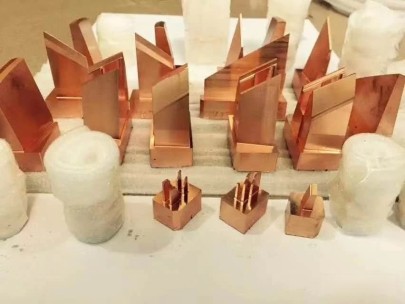
Copper Blocker in Mold Bases: Choosing the Right Insert for Precision Tooling
I’ve spent over a decade in mold engineering and precision tooling, where small details determine massive outcomes. One critical area where people get confused or overlook completely is copper blocker selection in mold bases. It might seem minor compared to cavity layout or ejection systems, but choosing the correct copper insert has real consequences on thermal regulation and final product finish. This piece dives into practical experiences I've encountered in specifying and troubleshooting inserts — not just theory from design manuals or CAD screenshots.
We're not looking at general best practices today — we’re dissecting why certain options like Cooper Menu copper blockers are better than off-shelf solutions, particularly when it comes to advanced applications like how to plate copper with silver, something many machinists only approach after repeated problems during EDM processes.
The Role of Copper Blockers Explained
In precision molds — especially multi-impression or hot runners—cooling management becomes unpredictable due to material flow variations. That's where custom inserts known as “copper blockers" come into play. They act as heat conductive barriers or bridges between mold steel and active components like cores and cavity steels. The effectiveness depends not just on their physical fit, but more importantly on thermal conductivity, durability under repeated thermal cycles, and compatibility with plating techniques such as silver plating methods used for high-performance EDM electrodes.
- Thermal efficiency: Higher copper purity allows for better cooling
- Contact integrity: Must avoid microgaps where moisture or resins accumulate
- Corrosion resistance: Especially important with water-cooled inserts
Why Most Mold Builders Miss the Critical Details
Mechanical specs get prioritized — tolerance, size fits, maybe alloy composition. Rarely is thermal conductivity analyzed unless part geometry creates defects downstream — shrink, sink marks around thick bosses. From my experience, engineers don’t factor in surface roughness post-machining, and even less frequently check inter-metallic bonding quality if multiple metal layers like Ni/Ag plating are involved.
The question often asked isn't “how good does this fit?", it's how to plate copper with silver properly without causing oxidation issues. And that leads straight into insert performance. Plating doesn't merely protect, it changes electrical resistance needed when you're making EDM copper blockers on a CNC machine using negative polarity.
A Comparison Table of Common Mold Insert Types
| Material Type | Heat Transfer W/m-K | Electrode Capability | Surface Finish Achievable Ra | Lifespan (approx.) |
|---|---|---|---|---|
| Beryllium-Copper | 300-400 | Very Good | ~0.2 μm | 5-7 Years |
| Oxygen-Free Copper | 390–410 | Good | ~0.1-0.3 μm | 4-6 Years |
| Zirconium-Copper | 280–330 | Fair | ~0.2-0.4 μm | 8-10 Years |
Mold Base Materials That Make a Real Difference
Selecting mold bases involves considering standard base material first — typically mild steel or stainless alloys depending on production scale. The challenge comes with matching your chosen block insert’s coefficient of thermal expansion to that base. A poorly matched combination causes uneven heat transfer which warps the core over thousands of cycles leading to premature maintenance or failure.
From a technical standpoint — ignoring marketing jargon — copper blocker choices really matter only if you’re dealing with long runs (exceeding 25K parts annually per mold) or thermoplastic materials sensitive to hot spotting.
The Practical Truths Behind Cooper Menu Selection
In Europe and US mold-building circles there's a brand called Cooper Menu gaining preference among high-speed medical device and connector molders who require minimal warpage tolerances. Why? Unlike generic alternatives they ensure tighter control across critical specs: purity (>99.5%), annealing consistency, and pre-bonded nickel barrier coats for easier subsequent plating (if doing things like plating silver over copper).
Silver-plated copper advantages:
- Improved electrical discharge stability during graphite/copper electrode use
- Prevention of oxidation within the mold runner zone (when sealed properly)
- Extended polishing life compared to standard bronze bushings
However, I have witnessed several mistakes involving platers that fail to properly prepare the interface before immersion bath deposition – especially when transitioning through different acid stages for bright vs matte silver results. Always request process validation data sheets showing plating thickness (ideally 3-10 μin) along with bend tests ensuring no exfoliation occurs later in service.
Risk Management: Avoid These Mistakes With Inserts
This section reflects painful experiences and shared knowledge passed from senior mentors.
Common errors observed firsthand include:
- Buying unbranded or reworked copper with unspecified oxygen entrapment risk.
- Neglecting regular thermal scan testing once a new set-up begins running.
- Dumping excessive coolant into mold cavities while blocking main line paths via misinstalled inserts.
- Treating all copper inserts as universal substitutes regardless of molding plastic type—especially relevant for PC/ABS where thermal stress can reach extreme levels in thin walls over long periods.
- Relying purely on manufacturer claims about thermal uniformity—perform basic thermistor measurements during startup phase of new tools.
Troubleshooting Copper Insert Integration Problems
I recall one project where inconsistent gate shine was linked incorrectly back to hot runner thermocouple drift, when in reality copper blockers placed behind deep cores had fractured micro-welds causing temperature imbalances. After replacement with oxygen-free variants featuring reinforced edges (OFC-F grade from a Cooper Menu supplier) we finally achieved the dimensional tolerance our QA department kept rejecting for 4 straight months.
You’ll likely never hear these issues taught in standard mold flow classes. But if you spend enough time working around high-precision automotive connectors and aerospace-grade composites molded with semi-crystalline plastics — these become crucial concerns day after day in manufacturing lines.
Key Takeaway Points
- Select inserts compatible with expected lifetime tonnage and resin thermal behavior
- If electroplating, perform proper pretreatments even for "mirror-grade" copper substrates
- Evaluate every copper blocker as an extensionof your temperature control system—not just mechanical fill
Every aspect we've looked at shows copper blockers shouldn’t be treated lightly — particularly where tight tolerance demands meet fast cycle times. If you aren't monitoring them alongside pressure losses across water channels, cooling line alignment or vacuum checks—you're probably leaving money on the table through increased rejects and downtime caused by avoidable overheating issues during operation